
Pre-Drilled Blocks vs Drill-and-Fill: Choosing the Right Brush Tufting Route
1. Two Routes from Bare Block to Tufted Brush
Every tufted brush passes through the same two operations: a hole is made in the block, and a tuft of filament is inserted and mechanically locked into it. The difference between the routes is whether those operations happen on one machine in one cycle, or separately.
With drill-and-fill, the drilling programme and the filling programme run together, so hole position, angle and depth are set by the machine every time. With pre-drilled tufting, the hole pattern arrives with the block and the operator’s job is to place each tuft accurately under the filling tool. If you are new to the core machine, start with what a brush drilling and filling machine is and how it works.
2. How Pre-Drilled Block Tufting Works
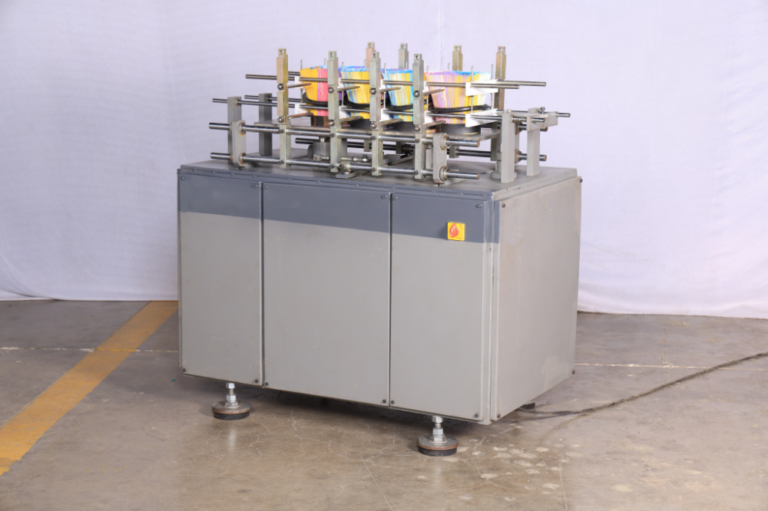
The Theta Manual vertical tufting machine is built specifically for pre-drilled blocks. The operator positions the block by hand, using a mechanical pointer to align each hole with the filling tool, and triggers each filling cycle with a foot pedal.
• Control: every tuft is placed by the operator, which suits bespoke patterns and prototypes.
• Flexibility: interchangeable holders accept flat, cylindrical and disc brushes.
• Materials: synthetic, natural and metallic fibres.
• Footprint and running cost: 0.2 kW power consumption and a machine weight of 150 kg.
• Output: 50 tufts per minute – deliberate, operator-paced production.
Its quiet advantage is refilling: when a single large brush needs retufting, the Theta handles it without tying up a CNC line. The case for manual production is made in full in the need for manual brush making machines.
3. How Integrated Drill-and-Fill Works
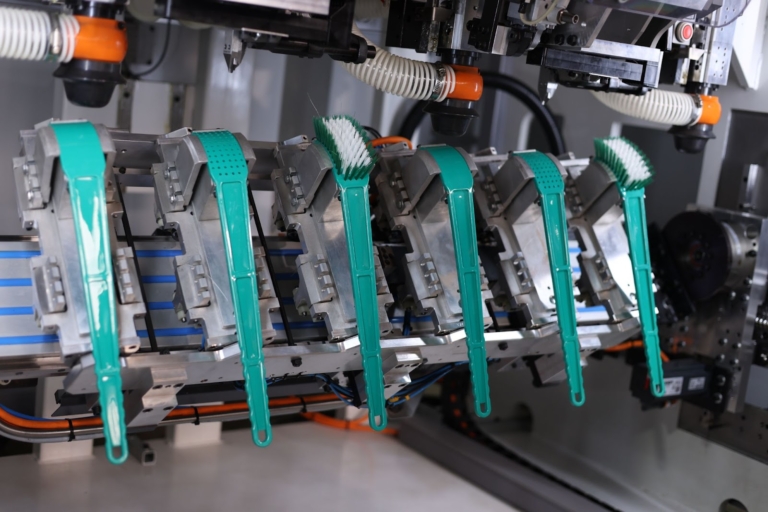
On a CNC drilling and filling machine, drills bore holes into the plastic, wooden or composite block at programmed positions, angles and depths, and filling tools immediately insert and lock the tufts using staple-set or anchor-set retention. Because the hole pattern is a programme rather than a property of the block, one machine produces many brush patterns without retooling the block supply.
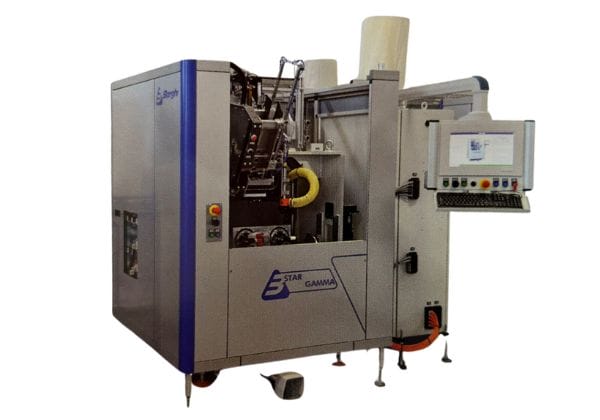
• Star Gamma: 1 drill and 1 filling tool, 5 axes, 450 tufts per minute, 2.6 kW. Built for quick changeover between models.
• Star Delta: 3 drills and 2 filling tools, 5 axes, 6 clamping stations, continuous operation at up to 1,000 tufts per minute. Stroke 85 mm, maximum brush width 100 mm, 5 kW.
The number of drills and filling tools is the main lever on output – the full calculation is in the brush making machine production capacity guide. For the CNC range as a whole, see the automatic brush making machine page.
4. Side-by-Side Comparison
| Factor | Pre-drilled (Theta Manual) | Drill-and-fill (Star Gamma / Star Delta) |
| Hole creation | Before tufting, outside the machine | On the machine, in the same cycle |
| Positioning | Manual, mechanical pointer | CNC, 5 axes |
| Cycle trigger | Foot pedal, per tuft | Automatic programme |
| Output | 50 tufts/min | 450 tufts/min (Gamma) to 1,000 tufts/min (Delta) |
| Power | 0.2 kW | 2.6 kW (Gamma) / 5 kW (Delta) |
| Pattern change | Change the block | Change the programme and tooling |
| Entry cost | Lowest in the range | Higher; scales with drills and filling tools |
| Best for | Custom, low-volume, technical, refills | Household volume, repeat SKUs, mixed catalogues |
5. Hole Quality, Block Material and Tuft Retention
Tuft retention is decided where the hole meets the filament. On a drill-and-fill machine, that makes drill condition a quality variable: blunt drills produce ragged hole walls, and ragged holes produce weak tufts. Drills and drivers are consumables – Borghi India supplies five of each free with the machine – and in-house sharpening on a dedicated drill sharpener keeps hole quality consistent. The routine is set out in brush making machine maintenance.
Retention method is the second variable. Staple-set drives a metal staple into the hole wall and needs conventional wall thickness. Anchor-set locks the tuft with a wire loop at the bottom of the hole and, using an anchor bar, allows handles with walls as thin as 6 mm. The comparison is detailed in staple-set vs anchor-set tufting.
On the pre-drilled route, hole accuracy is inherited from the block supplier, so incoming inspection of the hole pattern matters more. Both routes benefit from a first-article check – see the hole-pattern and retention checks in brush quality control.
6. Matching Brush Types to the Right Route
| Brush type | Recommended route | Reason |
| Double hockey toilet brushes | Drill-and-fill (Star Delta) | Up to 7,000 brushes in 24 hours |
| Round-head toilet brushes | Drill-and-fill | Round-head clamping system on the CNC platform |
| Flat brushes and brooms, radial or upright | Drill-and-fill | Repeatable patterns at volume |
| Custom disc and cylinder brushes | Pre-drilled (Theta) | Interchangeable holders, operator control |
| Prototype or one-off technical brushes | Pre-drilled (Theta) | No programme development for a single piece |
| Refilling a large worn brush | Pre-drilled (Theta) | Existing holes, manual placement |
For a sector-by-sector view of where technical brushes are used, read industrial vs household brush making machines.
7. Running Both Routes in One Factory
Many manufacturers do not have to choose. A CNC drilling and filling machine carries the volume catalogue, while a Theta Manual absorbs custom orders, prototypes and refills that would otherwise interrupt the CNC schedule. Both routes feed the same finishing stage – trimming, flagging and beating – so the brush production line stays a single flow after tufting.
If you are planning a new unit, the step-by-step setup is in how to start a brush manufacturing business, and the full specification checklist is in how to choose a brush making machine.
Frequently Asked Questions
What is the difference between a pre-drilled tufting machine and a brush drilling and filling machine?
A pre-drilled tufting machine only fills holes that already exist in the block. A brush drilling and filling machine bores the holes and inserts the tufts in one automated cycle.
Which is faster?
Drill-and-fill. The Star Gamma runs at 450 tufts per minute and the Star Delta at up to 1,000 tufts per minute, against 50 tufts per minute on the Theta Manual.
What hole diameters can the filling tools handle?
Filling tools on the Star Gamma and Star Delta cover 2.2 mm to 7.5 mm hole diameter, with fibre lengths from 40 mm to 300 mm.
Can I refill an old industrial brush?
Yes. The Theta Manual works on existing holes with manual positioning, which makes it suitable for refilling a single large brush.
Get the Right Machine for Your Brush
Share your block material, hole count and monthly volume, and Borghi India will recommend the right route – or the right combination. Compare drilling and filling machine configurations or contact the team.
Office +91 22 6223 1691 · Mobile +91 96191 40918 · info@borghiindia.com