
What Is a Brush Drilling and Filling Machine, and How Does It Work?
The brush drilling and filling machine is the core of every brush production line. In a single automated cycle it drills holes into a brush handle and fills them with bristles — the two operations that turn a bare block into a brush. If you’re new to brush manufacturing, this is the machine to understand first.
Step 1 — Drilling
CNC-controlled drills bore precise holes into the brush block — plastic, wood or composite — at programmed positions, angles and depths. Programmable drilling is what lets one machine produce many different brush patterns without retooling. Borghi machines can run up to 3 independent drills for higher throughput.
Step 2 — Filling (tufting)
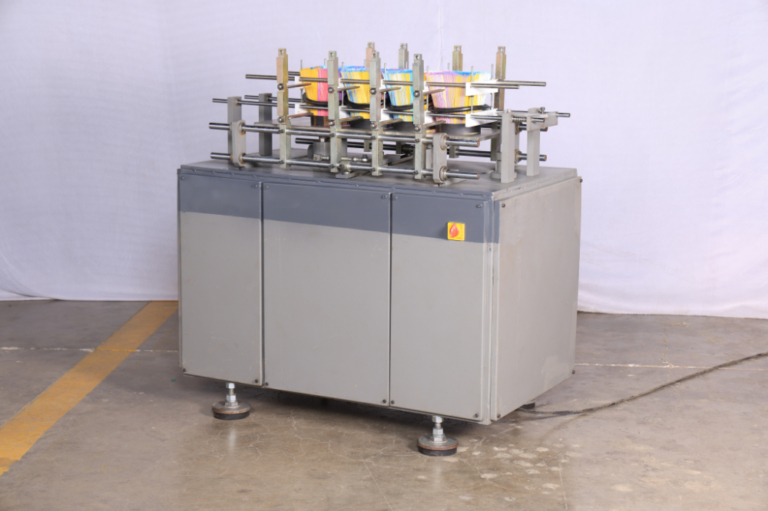
Filling tools insert bristle filaments into the drilled holes, using either a staple-set or anchor-set method, and secure them mechanically for permanent retention. Borghi machines support up to 2 filling tools. The number of drills and filling tools is the main lever on a machine’s output rate.
Staple-set vs anchor-set
Both methods lock bristles mechanically into the block for durability. The right choice depends on your brush type and bristle material. This is one of the key questions to settle before choosing a machine, because it influences tooling and setup.
Which machine for which volume
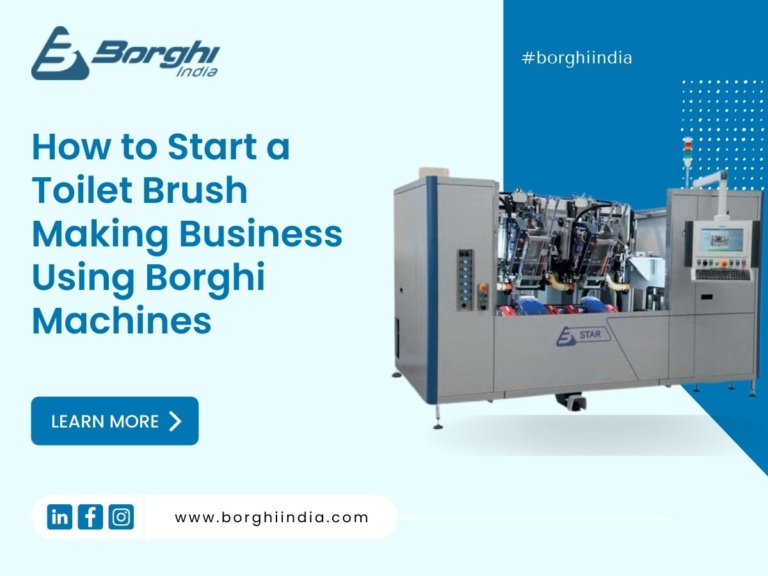
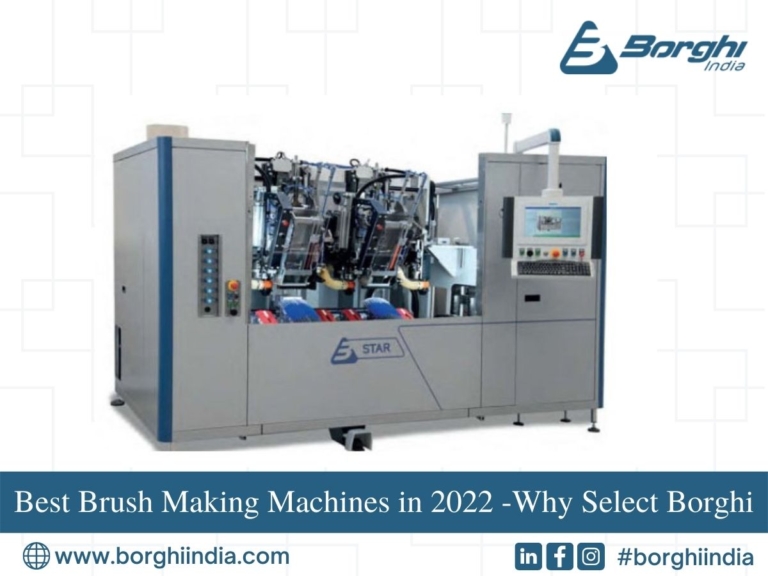
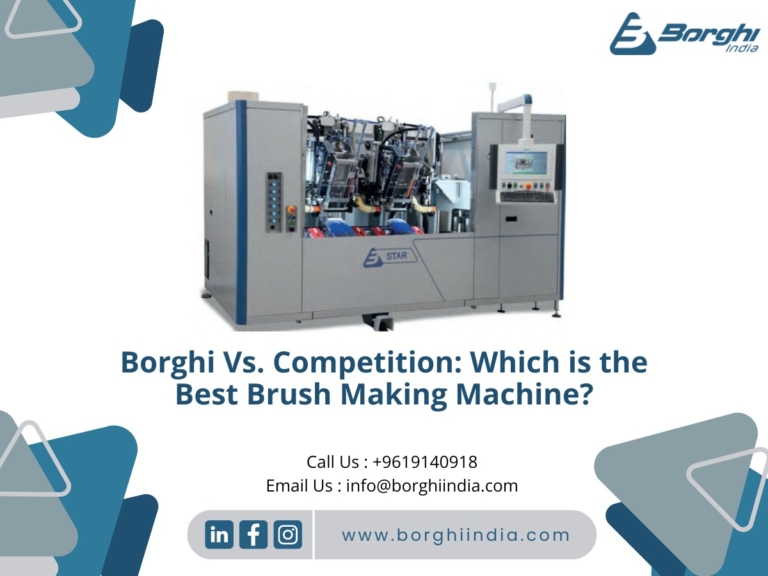
Borghi offers a full range built around this drill-and-fill core. The Star Gamma is a simple, quick-to-set-up machine ideal for small productions and frequent model changes. The Star Delta is the high-output flagship, with 6 clamping stations and continuous operation for large volumes and a wide brush variety. To weigh automation levels, see manual vs. automatic brush making machines.
See the full range
Browse the complete machine range to compare configurations, or contact Borghi India to match a drilling and filling machine to your production goals.