
Industrial vs Household Brush Making Machines: Which One Does Your Product Need?
1. What Separates an Industrial Brush Machine from a Household One
A household brush is a finished consumer product. A technical brush is frequently a functional component of a larger machine – a conveyor cleaner, a polishing roller, a deburring disc – so its bristle pattern, density and length are a specification, not a design choice. That single difference drives the machine architecture, the tooling, the materials and the economics of every production run.
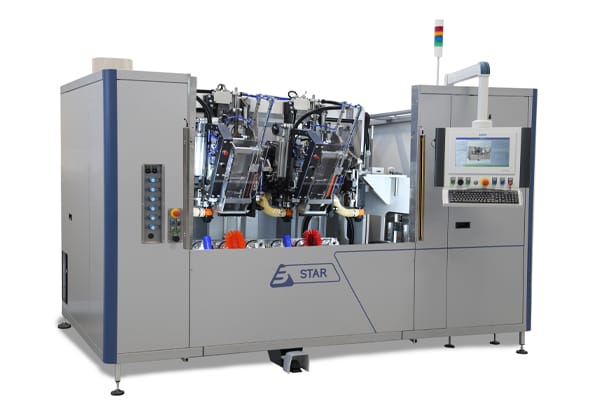
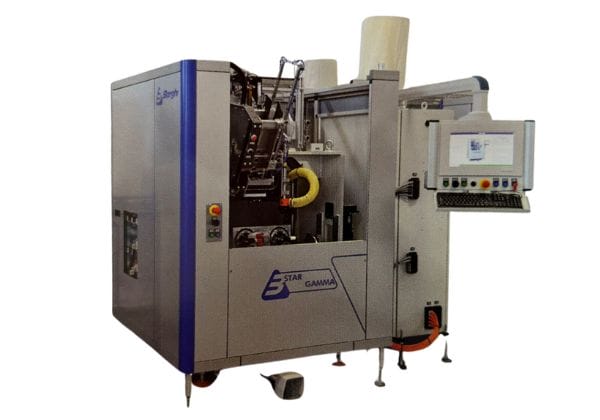
In Borghi India’s range, the household brush making machines – the Star Gamma and Star Delta – are 5-axis CNC vertical tufting machines that drill and fill in one automated cycle. The industrial range – the Theta Manual and the Sigma Twist Brush Machine – trades speed for control: the Theta fills pre-drilled blocks with operator-positioned tufts, and the Sigma builds brushes by twisting fibre between stem wires. The full configuration of the industrial platform sits on the technical brush machine page.
2. Side-by-Side: The Four Machines Compared
The table below sets the industrial and household platforms against each other on the specifications that decide fit.
| Specification | Theta Manual | Sigma Twist | Star Gamma | Star Delta |
| Family | Industrial / technical | Twisting machines | Household | Household |
| Process | Fills pre-drilled blocks; foot-pedal cycle | Twists fibre between stem wires | CNC drill + fill in one cycle | CNC drill + fill, continuous operation |
| Drills / filling tools | – / 1 | Not applicable | 1 / 1 | 3 / 2 |
| Axes / positioning | Manual, mechanical pointer | Clamping + hook unit | 5 axes | 5 axes, 6 clamping stations |
| Output | 50 tufts/min | On request | 450 tufts/min | Up to 1,000 tufts/min |
| Power | 0.2 kW | On request | 2.6 kW | 5 kW |
| Best for | Custom, low-volume, refills | Bottle, tube and industrial cleaning brushes | Small runs, frequent model changes | Continuous high-volume production |
Read the table as a spectrum rather than two boxes: the Theta gives maximum control per tuft, the Star Delta gives maximum tufts per hour, and the Star Gamma sits between them. The manual vs automatic brush making machine guide covers the automation question in more depth.
3. The Brushes Each Machine Family Produces
- Household (Star Gamma, Star Delta): flat brushes with radial or upright filling, round head toilet brushes, double hockey brushes, dish washing brushes, cloth washing brushes, and long, tall and hardy brooms.
- Industrial tufted (Theta Manual): flat, cylindrical and disc brushes through interchangeable holders – the shapes listed in types of industrial brushes.
- Industrial twisted (Sigma): loop-end, closed-end and cut-end twisted wire brushes – bottle brushes, tube brushes and industrial cleaning brushes. The process is set out in the twisted wire brush manufacturing guide.
Industrial demand is sector-led. Mapping the sector to the brush tells you which machine route you need:
| Sector | Typical brushes | Machine route |
| Automotive | Car wash brushes, engine cleaning brushes, polishing rollers | Theta (cylinder/roller holders); Sigma for internal cleaning |
| Food & beverage | Bottle brushes, conveyor cleaning brushes, tube brushes | Sigma for bottle/tube; Theta for conveyor rollers |
| Textile | Loom brushes, roller brushes | Theta with cylindrical holders |
| Pharmaceutical | Precision cleaning brushes for equipment and containers | Sigma or Theta, by geometry |
| Construction & maintenance | Scrubbing brushes, floor machine brushes | Theta (disc) or Star platform for flat scrubbers |
| General industrial | Disc, cylinder, abrasive and deburring brushes | Theta with abrasive filament |
4. Materials and Filling Tools: Where the Requirements Diverge
Both families tuft the same core synthetics – PP, PET, Nylon and abrasive filament – and the same natural fibres: Palmyra, Cocoa fibre and Tampico. The divergence is at the heavy end. The industrial range is specified for metallic fibres and wire, and abrasive filament is the basis of deburring and edge-finishing brushes used in metalworking.
On the household side, filling tool selection covers 2.2 mm to 7.5 mm hole diameter with fibre lengths from 40 mm to 300 mm on the Star Gamma and Star Delta. Filament choice changes how hard the tooling works, so pair this decision with the brush filament types guide and the brush making machine tooling breakdown before you finalise a specification.
5. Volume, Customisation and Changeover Economics
Household brush economics are measured in tufts per minute. Industrial brush economics are measured in setups per order. That is why the two families are optimised in opposite directions.
- Star Delta: 6 clamping stations and continuous operation produce up to 7,000 double hockey brushes in 24 hours. Idle capacity is expensive, so it suits a stable catalogue with large repeat orders.
- Star Gamma: quick changeover between brush models, built for small productions with frequent model changes – the practical choice for a diverse household range.
- Theta Manual: the lowest entry cost in the range, with full control over each tuft. It is equally suited to a one-off custom brush and to refilling a single large brush.
If you are sizing a line, run the numbers in the production capacity guide and check investment ranges in the brush making machine price in India guide before committing.
6. When One Platform Serves Both Markets
The boundary between household and industrial is not absolute. Through bridge options and interchangeable tooling, the Star Delta can produce cylinder brushes, cylindrical hairbrushes, tank brushes and discs alongside its household range. The Star Gamma can produce roller, disc and cylindrical brushes with complementary equipment.
On the carriage side, three configurations – radial carriage, double hockey carriage and round-head clamping – cover roughly 85% of household brushes, while roller and parallel carriages are available for special applications. How those carriages and the five axes shape each brush is explained in how automatic brush making machines set tuft geometry. For dedicated formats, see the tank brush making machine and the hair comb brush making machine.
7. How to Decide: A Product-First Decision Matrix
| If your core product is… | Start with | Why |
| High-volume toilet, double hockey and flat brushes | Star Delta | Continuous operation across 6 clamping stations |
| A diverse household range in smaller batches | Star Gamma | Fast changeover, 1 drill and 1 filling tool |
| Custom disc, cylinder or roller brushes, prototypes, refills | Theta Manual | Operator control of every tuft on pre-drilled blocks |
| Bottle, tube and twisted industrial brushes | Sigma Twist | Purpose-built for twisted-in-wire production |
| Mixed household and technical catalogue | Star Delta + Theta | Volume on the CNC line, one-offs on the manual machine |
Whichever route you choose, a brush is not finished until it is trimmed and shaped. Plan the brush trimming and finishing machine stage – Roto Trim, Roto 6 and Roto B – together with the tufting machine. If your industrial work runs on pre-drilled blocks, the trade-offs are covered in pre-drilled blocks vs drill-and-fill tufting.
Frequently Asked Questions
Can a household brush making machine produce industrial brushes?
Partly. The Star Delta can produce cylinder brushes, cylindrical hairbrushes, tank brushes and discs through bridge options and interchangeable tooling, and the Star Gamma can produce roller, disc and cylindrical brushes with complementary equipment. Highly customised, low-volume technical brushes are better suited to the Theta Manual.
Which industrial brush machine has the lowest entry cost?
The Theta Manual vertical tufting machine is the lowest-entry-cost machine in the Borghi India range. It works on pre-drilled blocks with a foot-pedal filling cycle.
Can industrial brush machines process metal wire?
Yes. Borghi India’s industrial machines process synthetic fibres, natural fibres and metallic wires, and the Sigma Twist Brush Machine works on metal or plasticised stem wire.
Do I need an experienced operator?
No. Borghi India trains your own technician – five days at the Bhiwandi facility and a further five days at your factory after installation and commissioning.