
Brush Quality Control: The Six Checks Every Batch Should Pass
Brush quality control comes down to six in-process checks: tuft retention, drilling accuracy, trim height uniformity, flagging and surface finish, filament consistency, and batch documentation. Each is measurable at the machine within a minute, and each maps to a specific production stage — which means defects can be traced to a cause rather than written off as scrap.
1. Why QC Decides Which Market You Sell Into
The commercial gap between a commodity brush and a branded retail brush is largely a quality-consistency gap. Modern trade buyers, regional supermarket chains and e-commerce platforms all reject on appearance and on returns data. Export buyers add their own inspection protocols on top.
The practical consequence: a manufacturer who cannot demonstrate consistent tuft retention and uniform trim height is confined to price-led channels. One who can, competes for shelf space at better margins. That is why the standard team structure for a small brush plant includes a dedicated finishing and QC operator alongside the machine operator — the role is described in how to start a brush manufacturing business in India.
2. Check One: Tuft Retention
Tuft retention is the single most important functional property of a brush. A tuft that pulls out in use becomes a complaint, a retail return and a lost account.
- Pull resistance. Apply a firm, consistent pull to sample tufts across the block — corners, centre and edges, because retention often varies by position. Set your own accept threshold per product and keep it constant; the point is repeatability.
- Anchor or staple seating. Confirm the staple or anchor wire is fully seated. Partial seating is usually a tooling or hole-depth issue rather than an operator issue.
- Handle wall integrity. Look for hairline splitting around holes on thin-walled handles. If it recurs, the product may need anchor-set rather than staple-set filling — the two methods are compared in brush making machine tooling explained.
3. Check Two: Hole Pattern and Drilling Accuracy
Drilling defects are cheap to catch at the machine and expensive to catch at the packing table. Inspect the first article of every run, then at fixed intervals:
- Hole pitch and pattern. Compare against the approved sample. Programme errors show up as a systematic shift across the whole block.
- Hole wall quality. Ragged or burred holes almost always mean a blunt drill. Route it to the drill sharpener rather than continuing the run.
- Depth consistency. Shallow holes cause weak retention; over-deep holes weaken the block. Both are correctable at setup.
Because these faults originate in the drill-and-fill cycle, understanding that cycle helps operators diagnose faster — see what a brush drilling and filling machine does.
4. Check Three: Trim Height and Profile Uniformity
Trim is what a buyer sees first. An uneven bristle face reads as a cheap product even when retention and filament quality are excellent.
- Overall height. Measure filament length at several points across the face against your specification.
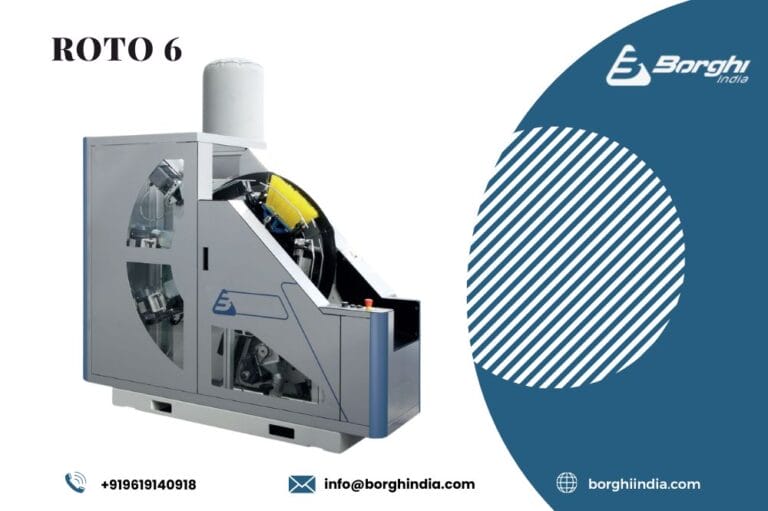
- Profile accuracy. Curved and contoured products must match the intended profile, not merely be flat and even. Profile trimming for flat and curved work is handled on Roto 6 machines, where cam-based models set the profile mechanically and electronically controlled models reposition tools by stepper motor for faster reconfiguration.
- Round and semi-spherical heads. Toilet brushes and glass-washing brushes need symmetric heads; Roto B is built for that geometry.
- Consistency across the batch. Roto Trim cuts all filaments to a precise uniform length — variation between pieces in the same carton is what buyers notice first.
The full finishing range is on the brush trimming and finishing machine page.
5. Check Four: Flagging and Surface Finish
Flagging splits bristle tips so the brush feels softer and picks up fine dust more effectively — a premium cue in retail and a performance requirement in some cleaning applications.
- Flag consistency. Check that tips are split evenly across the face rather than only at the edges. Roto Flag uses a 48-knife arrangement to produce accurately flagged tips.
- Surface uniformity. Roto Beat performs the final beating step that makes broom and brush surfaces visually uniform for retail presentation.
- • Loose filament and debris. Trapped cut filament in the pack is one of the most common and most avoidable retail complaints. Check dust extraction is working before blaming the operator.
6. Check Five: Filament Consistency and Blend
Raw material variation shows up as colour banding, stiffness variation between tufts, or brushes from the same order that do not match. Inspect at goods-inward as well as in-process:
- Incoming filament. Verify diameter, colour and stiffness against the approved sample for every lot of PP, PET, nylon or abrasive filament, and for natural fibres such as Palmyra, cocoa fibre and Tampico.
- Blend uniformity. Where the product uses a fibre blend, a filament mixer is the control point. Without it, blend ratio drifts through the batch.
- Fibre length. Confirm the loaded fibre length matches the product spec before the run rather than after trimming.
7. Check Six: Batch Records and First-Article Approval
Documentation converts good work into evidence a buyer can audit. Keep it light enough that it actually gets filled in:
- First-article approval. One inspected and signed-off piece at the start of every run, retained until the batch ships.
- In-process sampling. A fixed sampling interval, recorded against machine, operator, shift and filament lot.
- Rejection log by cause. Categorised as tufting, trimming, handle or filament. Over a month this data tells you exactly where to spend maintenance effort.
Rejection data is also a capacity input — every reject is machine time already spent. That link is developed in brush making machine production capacity.
8. Running QC With One Person
A small brush plant does not need a quality department. The standard structure is a finishing and QC operator who runs the Roto finishing machines and inspects for filament length consistency, tuft density and appearance as part of the same workflow. Set the station up with the approved sample, a length gauge, a defect log and good lighting, and the routine takes minutes per run.
| Stage | What to check | Where it is corrected |
| Goods inward | Filament diameter, colour, stiffness; handle dimensions | Supplier / handle mould |
| Setup | First article: hole pattern, depth, tuft seating | Machine program and tooling |
| In-process tufting | Tuft retention, missed holes, handle splitting | Drill condition, filling tool, filling method |
| Trimming | Height uniformity, profile accuracy | Roto Trim / Roto 6 / Roto B setup |
| Finishing | Flag consistency, surface uniformity, loose filament | Roto Flag / Roto Beat, dust extraction |
| Packing | Appearance, count, labelling | Packing station |
Frequently Asked Questions
How do you test tuft retention in a brush?
Apply a firm, consistent pull to sample tufts from different positions on the block and compare against the threshold set for that product. Use the same method and threshold every time so results are comparable batch to batch.
What causes weak tuft retention?
Most commonly blunt drills producing ragged holes, incorrect hole depth, or a staple or anchor that is not fully seated. Handle wall thickness and filling method also matter on thin-walled moulded handles.
How often should quality checks be run?
First article at every setup, then at a fixed sampling interval through the run. Increase frequency after any tooling change, filament lot change or operator change.
Does finishing equipment really affect saleability?
Yes. Trimming, flagging and beating determine the appearance and perceived quality that branded retail and export buyers assess first — which is why a finishing line is part of a complete brush production line, not an optional extra.
Build Quality Into the Line, Not the Inspection Table
Most brush defects are tooling and setup problems that reach the QC table as scrap. Borghi India supplies tufting, twisting, mop assembly and finishing machinery across India, Nepal and Bangladesh, with commissioning and operator training that covers quality validation on your own products. Talk to the team, or read next: brush making machine tooling explained and types of industrial brushes.