
A Guide to Manufacturing High-Quality Wet Mops
Introduction:
Mops are an indispensable tool for maintaining cleanliness and hygiene in various settings, from households to commercial spaces. Manufacturing these essential cleaning tools requires careful planning, the right equipment, and top-quality raw materials. In this blog post, we will explore the basic requirements and the step-by-step process involved in manufacturing wet mops that meet market demands and exceed customer expectations.
If you are still evaluating whether to enter this category at all, our companion guide on building a profitable mop making business covers market potential, customer segments and manpower planning. This guide focuses specifically on the manufacturing side — the equipment, materials and process.
Identifying and Selecting Cleaning MOPs
Before diving into the manufacturing process of wet mops, it is crucial to identify and select the types of mops you wish to produce and introduce to the market. This step sets the foundation for your business’s success as it directly aligns your products with your target market’s needs and preferences.
Conduct thorough market research to understand the demand for different types of mops in various settings, such as households, offices, hospitals, or industrial facilities. Consider factors like material preference, size requirements, and specialized features that customers may be looking for in a wet mop.
Once you have a clear understanding of your target audience’s needs, narrow down your selection to a few key types of mops. For example, you may choose to focus on traditional cotton yarn mops for general cleaning, microfiber mops for enhanced absorbency and dust trapping, and polyester-cotton yarn mops for a balance of durability and cleaning efficiency.
By offering a diverse range of mops, you can cater to a broader customer base and stay competitive in the market. Additionally, keep an eye on emerging trends and innovations in the cleaning industry to adapt your mop selection accordingly and ensure you stay ahead of the competition.
Product Decisions That Determine Your Machine Specification
Your product range choice is not just a marketing decision — it dictates what equipment you can buy. Before you shortlist machinery, fix the following:
- Socket type — plastic caps, metal caps, or combination plastic-metal caps
- Socket width — 6 inch and 8 inch are the common formats in the Indian market
- Mop length — the finished yarn length, which drives your yarn consumption per unit
- Yarn type — cotton, polyester-cotton blend, microfiber, or non-woven material
- Handle type — determines whether you assemble in-house or ship the mop head separately
The 12 points to consider when buying a mop making machine walks through each of these decisions in sequence.
Injection Molding Machines and Molds
Once you have finalized the mop design and identified the plastic clips as a crucial component, the next step is to acquire injection molding machines and create custom molds. These machines will enable you to manufacture the upper and bottom plastic clips that securely hold the mop yarn in place, ensuring the mop’s longevity and effectiveness.
Invest in high-quality injection molding machines that offer precision and efficiency in the molding process. Custom molds should be designed to match the specifications of your mop design and size requirements. Most importantly, the clips must be free from flash and shrinkage to offer a producer nonstop productivity. Also ensure that the clips fit the mop perfectly, preventing any potential issues during use.
Collaborate with skilled mold designers and manufacturers to create durable and well-finished molds. Proper maintenance and regular inspections of the molding equipment are essential to ensure consistent output and reduce the risk of defects in the clips.
Why Clip Tolerance Matters More Than It Looks
A clip with flash or shrinkage will not seat correctly in the assembly machine. On a semi-automatic line, that means the operator stops, clears, and restarts — and a machine that should be running continuously starts losing hours every shift. Clip quality is a throughput issue, not a cosmetic one.
- Specify tolerance limits with your mold maker in writing, not verbally
- Run a first-article inspection on every new mold before bulk production
- Schedule mold cleaning and inspection intervals rather than reacting to defects
- Keep a second mold set for high-volume SKUs to avoid a total production stop
Buy or Outsource?
Many manufacturers start by buying clips from an established molder and bring molding in-house only once volume justifies the capital. Outsourcing removes a machine, a mold investment and an operator from your Phase 1 setup — worth considering if you want to prove demand before committing.
MOP Making Machine
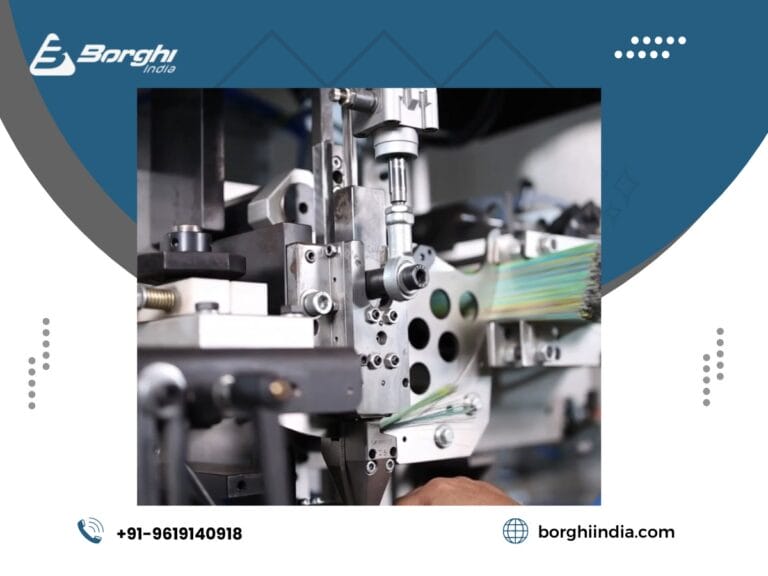
The heart of the wet mop manufacturing process lies in the mop manufacturing machines used to assemble the final product. These specialized machines bring together the plastic clips and selected yarn materials to create durable, high-quality wet mops efficiently and consistently.
Invest in state-of-the-art mop manufacturing machines that automate the assembly process, ensuring uniformity, precision, and higher production output. The machine should be versatile enough to accommodate various mop designs and sizes, allowing manufacturers to respond quickly to changing market demands.
Hire skilled machine operators who are well-trained in handling the equipment and can troubleshoot any issues that may arise during production. Regular maintenance and calibration of the machine are essential to ensure optimal performance, reduce downtime, and extend the lifespan of the equipment.
The heart of the wet mop manufacturing process lies in the mop making machine. This specialized equipment brings together the plastic clips and the selected yarn materials to form the final product.
Invest in a state-of-the-art mop making machine that automates the assembly process, guaranteeing uniformity and efficiency in production. The machine should be versatile and capable of accommodating various mop designs and sizes, allowing you to adapt to changing customer demands.
Hire skilled machine operators who are well-trained in handling the equipment and can troubleshoot any issues that may arise during production. Regular maintenance and calibration of the machine are essential to ensure its optimal performance and prolong its lifespan.
How the Assembly Cycle Works
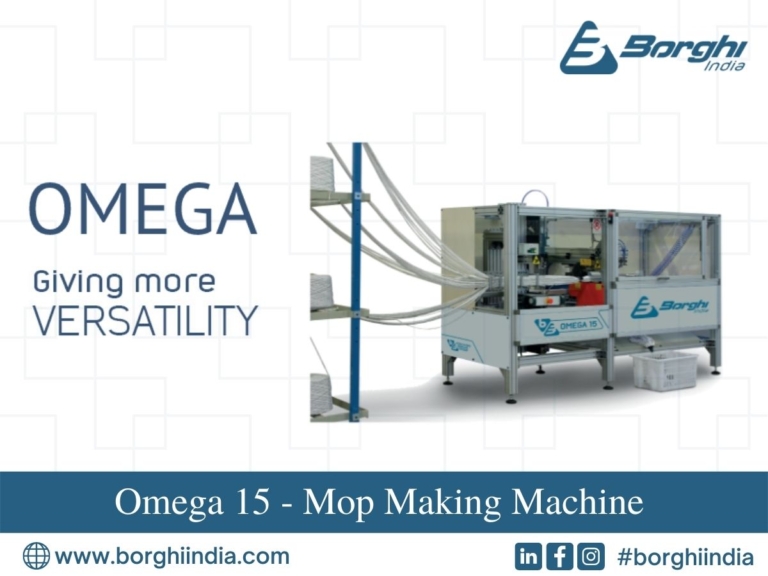
The Omega 15 is a semi-automatic machine for the assembly of mops made of both cotton and synthetic material. The cycle runs as follows:
- The operator feeds the machine with plastic or metal sockets and staples.
- Yarn is drawn from the spool rack into the assembly position.
- The operator enables the assembly cycle and the yarn is secured into the socket.
- The mop is pulled towards the unloading area.
- The machine automatically cuts the mop to the set length and ejects it.
The two steps that consume the most time in manual production — measuring and cutting to a consistent length — are handled by the machine, which is why output per operator rises sharply once you move off manual assembly.
Omega 15 Technical Data
| Specification | Value |
| Minimum mop length | 340 mm |
| Maximum mop length | 1200 mm |
| Maximum socket width | 200 mm (8 inches) |
| Output at 500 mm mop length | 300 mops/hour |
| Power consumption | 0.5 kW |
| Air consumption | 12.3 cfm @ 5 bar |
| Weight | 750 kg |
| Dimensions | L 3200 × W 1500 × H 1900 mm |
Air Compressor, Stabilizer, and Supporting Equipment
To ensure the smooth operation of the mop-making machine, it is essential to have the right supporting equipment in place. Two crucial components are the air compressor and the stabilizer.
Air Compressor
The mop-making machine relies on pneumatic components to function effectively. An air compressor provides the necessary compressed air to power these components. Investing in a reliable and adequately sized compressor will ensure consistent and efficient operation, reducing downtime and production delays.
Size the compressor against the machine’s rated demand, not a rule of thumb. The Omega 15 consumes 12.3 cfm at 5 bar. Practical sizing points:
- Select a compressor rated comfortably above continuous demand so it is not running at 100% duty cycle
- Include a receiver tank to smooth demand peaks during the assembly cycle
- Fit an air dryer and filtration — moisture in the line is the most common cause of pneumatic valve failure in Indian humidity
- Allow headroom if you plan to add a second machine or a pneumatic packing station later
Stabilizer
A stable power supply is vital for the safety and performance of the mop-making machine. Voltage fluctuations and power surges can damage the equipment and disrupt production. By using a stabilizer, you can regulate and stabilize the electrical voltage, safeguarding the machine from potential electrical issues.
The Omega 15 itself draws only 0.5 kW, so the stabilizer is about protection rather than capacity. Size it to cover the whole production floor load — the compressor and any injection molding machine will carry the far larger connected load, and those are the loads that create the fluctuations you are protecting against.
Other Supporting Equipment
- Cleaning and maintenance tools for the machines
- A basic spares inventory — consumables and wear parts that would otherwise halt a shift
- Measuring and inspection tools for length and weight consistency checks
- Trolleys or bins for work-in-progress movement between assembly and packing
Regular maintenance checks and servicing will extend the lifespan of the equipment and prevent unexpected breakdowns. Borghi India supplies spare parts and technical assistance locally, so downtime is not dependent on an overseas lead time. readily available to ensure smooth day-to-day operations. Regular maintenance checks and servicing will extend the lifespan of the equipment and prevent unexpected breakdowns.
Basic Raw Materials Required
The quality of the wet mop directly depends on the choice of raw materials. It is essential to source top-notch materials to manufacture mops that meet or exceed customer expectations.
Cotton Yarn
Cotton yarn is a classic and widely used material for wet mops. It offers excellent absorbency and is ideal for general-purpose cleaning. Cotton yarn mops are suitable for various surfaces and are often preferred for their durability.
Polyester-Cotton Yarn
Blending polyester with cotton yarn adds strength and resilience to the mop. Polyester-cotton yarn mops offer improved durability and can withstand more extensive use in commercial and industrial settings.
Microfiber
Microfiber mops have gained popularity in recent years due to their superior absorbency and dust-trapping capabilities. They are highly effective in capturing small particles and germs, making them an excellent choice for cleaning in healthcare facilities and areas with stringent hygiene requirements.
Material Comparison
| Material | Key Strength | Best Suited For | Relative Cost |
| Cotton yarn | Absorbency | General-purpose household and retail | Lowest |
| Polyester-cotton blend | Durability under heavy use | Commercial and industrial cleaning | Mid |
| Microfiber | Dust trapping and fine particle capture | Healthcare, high-hygiene environments | Highest |
By carefully selecting and sourcing these raw materials, you can manufacture wet mops that cater to different cleaning needs and preferences, further establishing your brand’s reputation for quality and performance.
A practical note on sourcing: the Omega 15 runs cotton and synthetic material on the same machine, so you are not committed to a single supply chain. That flexibility matters when yarn prices move — you can shift your product mix without changing equipment.
Stick/Handle Materials
The stick or handle of the wet mop plays a significant role in its usability and durability. Different materials offer various advantages, and the choice depends on factors like budget, target market, and intended use.
Steel
Steel handles are sturdy and offer excellent longevity. They are a popular choice for heavy-duty mops used in industrial environments or areas with high foot traffic.
MS Coating
Mild steel handles with a protective coating provide corrosion resistance, making them suitable for mops used in humid or wet environments.
Wood
Wooden handles are lightweight and often preferred for household cleaning. They offer a comfortable grip and are aesthetically pleasing.
PVC
Several stick producers offer sticks in PVC or CPVC material. While this is a workable option, the cost of material does not offer an economical solution at most price points.
Handle Selection Summary
| Handle Material | Advantage | Typical Application |
| Steel | Longevity, load-bearing | Industrial, high-traffic facilities |
| MS with protective coating | Corrosion resistance | Humid and wet environments |
| Wood | Light, comfortable grip, low cost | Household and retail |
| PVC / CPVC | Light, corrosion-free | Niche use; cost rarely competitive |
Manufacturers can choose to outsource stick or handle production, or import them, depending on availability and cost-effectiveness. Ensuring the stick and handle materials meet ergonomic standards will enhance user experience and reduce strain during cleaning tasks.
Packing Materials
Once the wet mops are manufactured and ready for distribution, appropriate packing materials are essential to protect the mops during transportation and storage.
- Poly bags: Individual mops can be sealed in poly bags to prevent dust and moisture from compromising their cleanliness.
- Cartons: Cartons provide a sturdy and safe packaging solution for multiple mops, ensuring they are well-protected during transit.
- Labels and barcodes: Required if you intend to supply modern trade or list on e-commerce platforms.
- Strapping and pallets: For bulk institutional dispatch.
The packaging should be designed to be efficient and eco-friendly, reflecting your commitment to sustainability and reducing environmental impact. If your route to market is own-brand retail rather than bulk contract supply, packaging is not an afterthought — it is the difference between shelf placement and rejection.
Space, Power, and Labor
Establishing a suitable manufacturing facility is vital for efficient production. The space should accommodate the machines, storage for raw materials, and finished products. Additionally, ensure that the facility adheres to safety regulations and allows smooth workflow.
An uninterrupted power supply is crucial for maintaining productivity and preventing damage to the machines. Backup power sources should be in place to tackle any unexpected power outages.
Lastly, skilled labor plays a crucial role in the manufacturing process. Train your workforce to handle the equipment, maintain quality standards, and troubleshoot potential issues. A well-trained team will contribute to the success of your wet mop manufacturing venture.
Planning the Floor Layout
The Omega 15 occupies a footprint of 3200 × 1500 mm and weighs 750 kg. Around that machine you need to plan for:
- Yarn storage — spool inventory close to the spool rack for fast changeover
- Socket and staple storage — at the operator station, since these are hand-fed
- Unloading and staging area — clear space at the eject end for finished mop heads
- Handle assembly and packing bench — downstream of assembly
- Finished goods store — sized to your dispatch cycle, not your daily output
- Operator movement space — safe clearance on all working sides of the machine
Confirm floor loading and single-phase or three-phase connection requirements with your electrical contractor before installation.
Labor Structure
A typical small unit runs with one skilled machine operator, two assistants for yarn loading, handle assembly and packing, and a supervisor covering quality checks and dispatch. Because cutting and ejection are automated, this headcount stays flat as output rises — which is where the unit economics improve.
Frequently Asked Questions
What machines are needed to manufacture wet mops?
An injection molding machine with custom molds to produce the plastic clips, a mop making machine to assemble yarn into the socket, an air compressor to drive the pneumatic components, and a stabilizer to protect against voltage fluctuation.
What is the output of a wet mop making machine?
The Omega 15 produces 300 mops per hour at a 500 mm mop length. Output varies with mop length and socket size.
What mop lengths and socket sizes can be produced?
Mop lengths from 340 mm to 1200 mm, with a maximum socket width of 200 mm (8 inches). Both plastic and metal sockets are supported.
What size air compressor is needed for a mop making machine?
Size it against the machine’s rated demand. The Omega 15 consumes 12.3 cfm at 5 bar. Select a compressor rated above continuous demand, and include a receiver tank, air dryer and filtration.
Which yarn is best for wet mops?
Cotton yarn for absorbency in general-purpose cleaning, polyester-cotton blend for durability in commercial and industrial use, and microfiber for dust trapping in healthcare and high-hygiene environments. Most manufacturers run more than one.
Can microfiber and non-woven mops be made on the same machine as cotton mops?
Yes. The Omega 15 handles both cotton yarn and synthetic material. The optional BTP 800 slitting unit cuts non-woven material spools into strips and feeds the machine directly.
How much power does a mop making machine consume?
The Omega 15 draws 0.5 kW. In a mop manufacturing facility, the injection molding machine and air compressor carry the larger connected load.
Is the mop assembly process automatic or manual?
Semi-automatic. The operator feeds sockets and staples and enables the cycle; the machine then cuts the mop to the set length and ejects it automatically.
Conclusion:
Manufacturing high-quality wet mops requires a comprehensive understanding of customer needs, investment in advanced equipment, and sourcing top-notch materials. By adhering to the essential requirements and following a step-by-step process, you can produce wet mops that meet market demands and establish your brand as a reliable provider of efficient cleaning solutions. With the right mix of product diversity, quality, and customer service, your wet mop manufacturing venture is well-positioned for success in the competitive cleaning industry.
Borghi India supplies Italian-engineered mop making machinery across India, Nepal and Bangladesh, with spare parts and technical assistance available locally. To discuss machine selection, capacity planning or a factory visit, contact our team.
Planning a broader cleaning-products facility? Explore household brush machines and machine accessories, or review the brush making machine FAQs.