

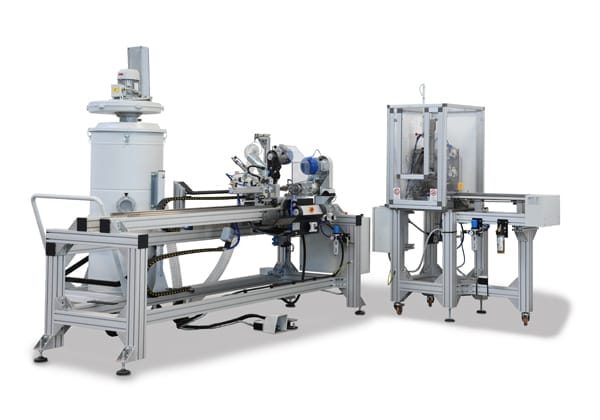
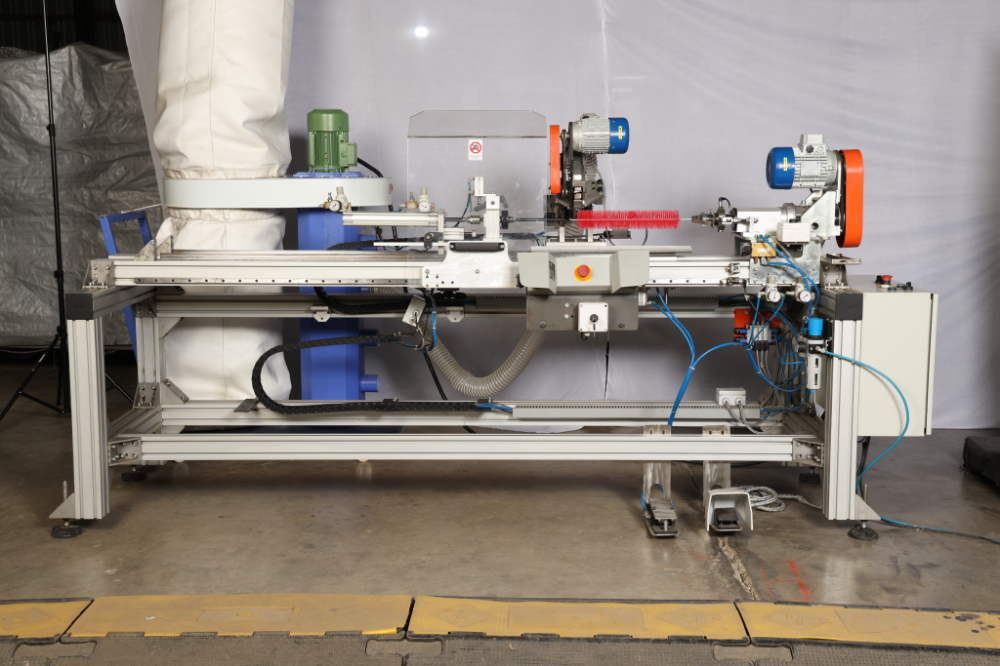
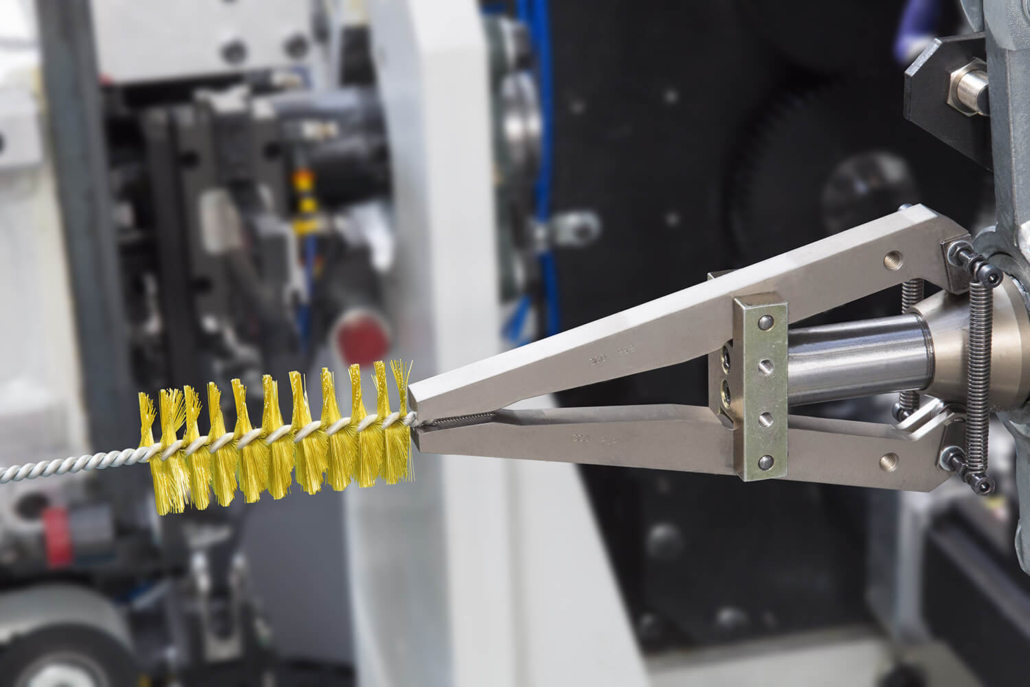
Twisted wire brushes — bottle brushes, tube brushes and industrial cleaning brushes — are made by twisting fibre between two stem wires. Because the bristles are held tightly, they clean curved and internal surfaces far more effectively than flat brushes. This guide explains how they are manufactured on the SIGMA TWIST BRUSH MACHINE.
The process runs in four stages: the stem wire is clamped in place; a hook unit (or optional second clamping unit) holds it under tension; tufts of fibre are set between the two stem wires; and the wire is twisted, then trimmed to a symmetrical finish. The result is a durable brush with bristles locked along a twisted core.
The SIGMA is usually paired with a filament setter that prepares the fibre tufts for insertion, and automation that increases efficiency and reduces labour.
Food and beverage (bottle and tube cleaning), automotive, pharmaceutical and general industrial maintenance all rely on twisted wire brushes. For the wider technical range, see the industrial brush machine guide.