
Brush Filament Types Explained
Brush Filament Types Explained: Choosing the Right Bristle for Every Brush
Short answer: PP filament covers most general-purpose household cleaning, PET handles general cleaning and pet-hair pick-up, nylon and Nylon 66 suit deep cleaning and high-wear duty, abrasive filament is used for edge finishing and deburring in metalworking, and natural fibres – Palmyra, Cocoa and Tampico – serve brooms and eco-positioned lines. One Borghi tufting platform runs all of them; what changes is the filling tool, the hole diameter and the fibre length.
1. What a brush filament is – and why the material decides the brush
A filament is the individual bristle strand that gets inserted into a drilled hole and locked in place as a tuft. Everything a customer judges a brush by – stiffness, recovery after bending, scratch behaviour, water pick-up, service life – is set by three variables: the polymer or fibre you choose, the filament diameter, and the tuft length and density. The machine controls placement and retention; the filament controls performance.
This is why filament selection sits upstream of almost every other decision in a brush plant. It dictates your filling tool sizes, your handle hole pattern, and often your finishing sequence on the brush trimming and finishing machine – flagged PP behaves very differently from unflagged nylon.
2. Synthetic filaments compared: PP, PET, nylon and abrasive
Borghi India’s machines process the full synthetic range – PP, PET, Nylon and abrasive filaments – on the same tufting platform, with the filling tool selected to match hole diameter and tuft volume.
| Filament | Relative stiffness | Best suited to | Notes |
| PP monofilament | Standard reference | All-purpose cleaning of carpets, rugs and household surfaces | The default working filament for most Indian household brush lines |
| PET monofilament | Firmer than PP | General-purpose brushing and pet-hair pick-up | Good all-round choice where a little more bite is wanted |
| Nylon monofilament | Firm | Deep cleaning; picks up pet hair effectively | Common on premium household and technical brushes |
| Nylon 66 | Slightly stiffer than PP monofilament | High-traffic areas – stairs, halls, heavily soiled carpets | Longer service life and better results under repeated load |
| Abrasive filament | Highest | Edge finishing and deburring in metalworking | Runs on the same machines as synthetic, natural and metallic fibres |
If you are building an industrial or technical range rather than a household one, the abrasive row is the one to look at closely – see the industrial brush machines range and the breakdown of types of industrial brushes for the applications these filaments serve.
3. Natural fibres: Palmyra, Cocoa and Tampico
Natural fibre is not a legacy category in India – it is still a working, sellable one. Borghi India’s machines handle Palmyra, Cocoa and Tampico alongside synthetics, which matters for brooms, deep-cleaning brushes and any product line positioned on eco-credentials. Natural fibres are also favoured for deep cleaning and by pet owners.
Two practical points. Natural fibre varies batch to batch more than extruded synthetic does, so incoming inspection matters more. And it usually needs a different filling tool size than the synthetic you run alongside it – plan tooling accordingly rather than assuming a single tool covers both.
4. Wire and metallic fibres
Metallic wire sits in a separate category. It is used as the fibre itself in twisted brush production, and separately as the staple or anchor wire that retains a tuft in staple-set and anchor-set tufting. Borghi India’s industrial machines run metallic wires as fibre; for twisted products the process is different again, and covered in the twisted wire brush making machine guide.
If you are running staple-set tufting, remember that wire is a consumable in your cost per brush – which is one of the reasons the retention method you choose matters. That trade-off is covered in staple-set vs anchor-set tufting.
5. Matching filament to brush type
| Brush | Typical filament | Machine route |
| Toilet brush / double hockey | PP or PET | Vertical tufting with round-head clamping or double hockey carriage |
| Dish and kitchen brush | PP, often blended | Vertical tufting, radial or upright filling |
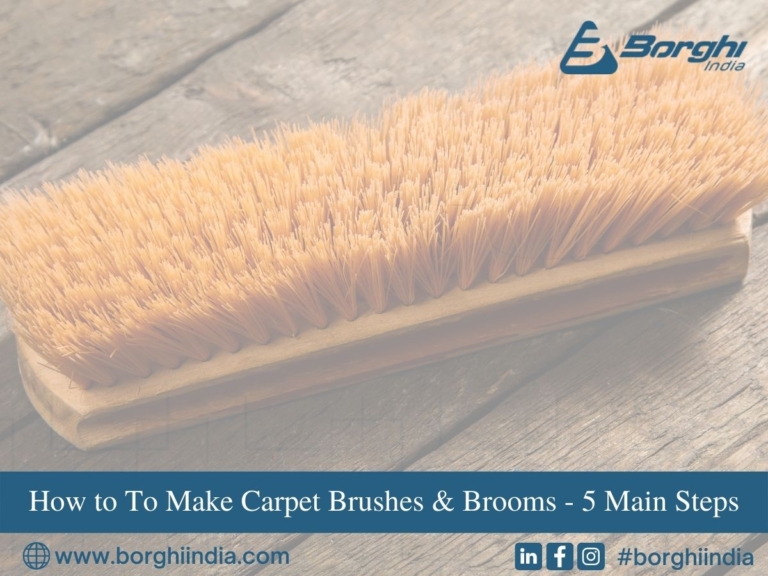
| Broom and carpet brush | PP, PET, Nylon 66, natural fibre | Tufting, then trimming, flagging and beating |
| Hair brush | Nylon or PP, tipped | Tufting plus tipping on a finishing machine |
| Tank and cylinder brush | PP, Nylon or natural fibre | Vertical tufting with cylinder tooling |
| Deburring / technical brush | Abrasive filament, metallic wire | Industrial drilling and filling |
| Twisted wire brush | PP, Nylon, abrasive, metallic | Twisting rather than tufting |
The finishing steps in row three are not optional extras. Carpet and broom filament only performs once it has been trimmed, flagged and beaten – the sequence is set out in the guide on how to make carpet brushes and brooms. Tipped bristles for hair brushes are a separate finishing operation again, explained in why your hair brush needs tipped bristles.
6. The machine-side numbers that constrain your filament choice
Filament selection is bounded by what the tufting machine can physically hold and insert. On Borghi India’s vertical tufting machines the working envelope is:
• Filling tool hole diameter: 2.2 mm to 7.5 mm – this sets tuft volume, and therefore the density and stiffness the finished brush can achieve.
• Fibre length: 40 mm to 300 mm, covering everything from a short dish brush to a long broom.
• Handle wall thickness: using an anchor bar, brushes can be made on walls as thin as 6 mm.
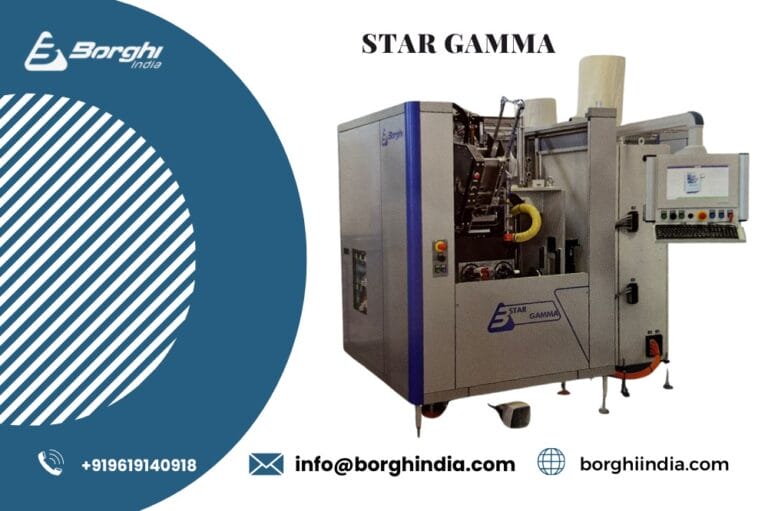
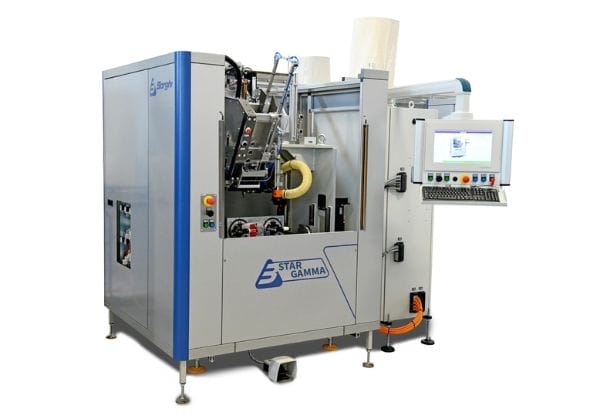
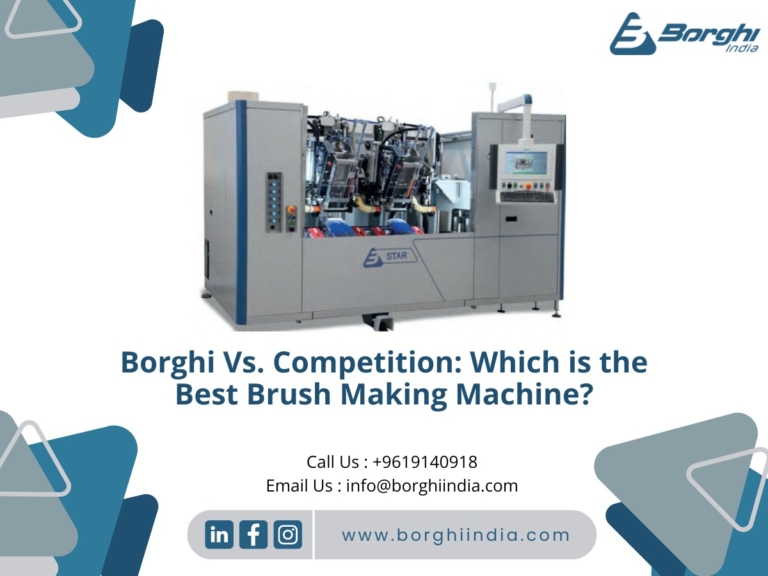
• Filling tools and drills: the number carried is the main lever on output rate. The Star Gamma runs 1 drill and 1 filling tool at 450 tufts/minute; the flagship Star Delta runs 3 drills and 2 filling tools across 6 clamping stations at up to 1,000 tufts/minute.
Choosing a heavier filament without checking the filling tool range is one of the more common and more expensive mistakes a new manufacturer makes. The machine side of that decision is explained in the brush drilling and filling machine overview.
7. Blending grades and colours with a filament mixer
Most commercially interesting brushes are not single-filament. Blending lets you combine stiffness grades and colours in one tuft – a stiffer core for scrubbing with a softer outer for surface protection, or a colour signature that makes your brand recognisable on a retail shelf. Uneven blending shows up immediately as inconsistent stiffness across a batch, which is exactly the defect a filament mixer prevents. The case for adding one to the line is made in the need for filament mixers in household brush manufacturing.
8. Sourcing filament in India without over-committing
Filament is bought in bulk, which is awkward when you are still deciding which grades your market actually wants. Borghi India addresses this two ways: it stocks filament in small quantities so a new manufacturer can sample several fibre types and colours before committing to bulk purchase, and on order confirmation it shares its list of filament manufacturers (PP, PET, Nylon, Abrasive) and metal wire suppliers, plus references for handle material.
Practically, that means your first filament decision does not have to be final. Sample, run trial batches, sell them, and only then lock in bulk contracts. If you are still at the planning stage, the sequence is laid out in how to start a brush manufacturing business, and the capital side in the guide to brush making machine price in India.
Frequently asked questions
Which brush filament is most widely used in India? PP monofilament. It is the default for all-purpose household cleaning brushes, carpet brushes and rug brushes, and it is the most economical to run at volume.
Can one brush making machine run different filament types? Yes. Borghi India’s machines process PP, PET, Nylon and abrasive filaments plus natural fibres – Palmyra, Cocoa, Tampico – and metallic wires. The filling tool is selected to match the filament and hole diameter.
What is the difference between PP and nylon brush bristles? Nylon 66 is slightly stiffer than PP monofilament, lasts longer and performs better in high-traffic, heavily soiled applications. PP is the more economical all-purpose choice.
What filling tool sizes are available? Hole diameters from 2.2 mm to 7.5 mm, with fibre lengths from 40 mm to 300 mm.
Do I have to buy filament in bulk to start production? No. Borghi India keeps small quantities of filament in stock so new entrants can trial several colours and grades before buying bulk from filament manufacturers directly.
Can brushes be made on thin-wall handles? Yes – using an anchor bar, wall thickness can go as low as 6 mm.
Closing CTA (copy as-is)
Choosing filament is easier with the machine envelope in front of you. Borghi India’s team can map your intended product mix to filling tool sizes, fibre lengths and filament grades before you commit to raw material. Contact Borghi India – +91 22 6223 1691 · info@borghiindia.com.