

Brush Making Machine Tooling Explained: Drills, Filling Tools, Carriages and Changeover
Tooling — not the machine frame — decides what a brush making machine can actually produce. Drill diameter sets the hole, the filling tool sets the tuft, and the carriage or clamping system sets the brush geometry. Two identical vertical tufting machines with different tooling packages will produce entirely different product ranges, at entirely different changeover speeds.
1. What You Are Really Buying: Machine vs Tooling
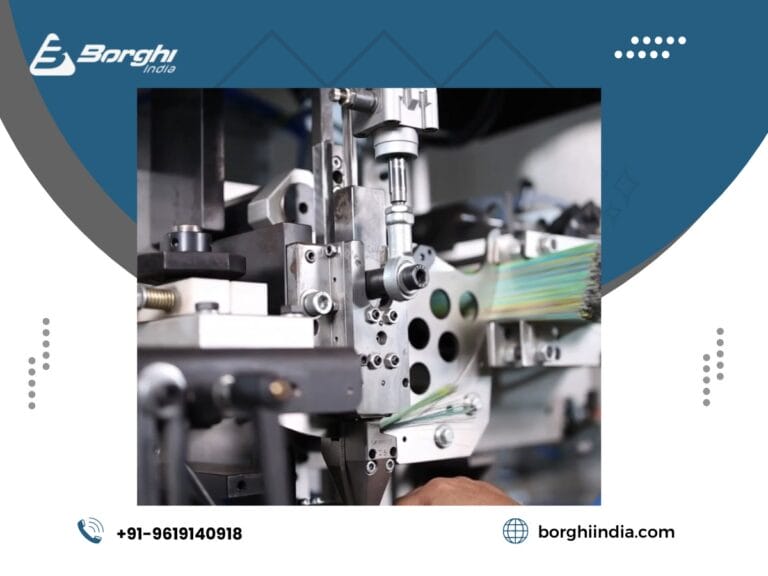
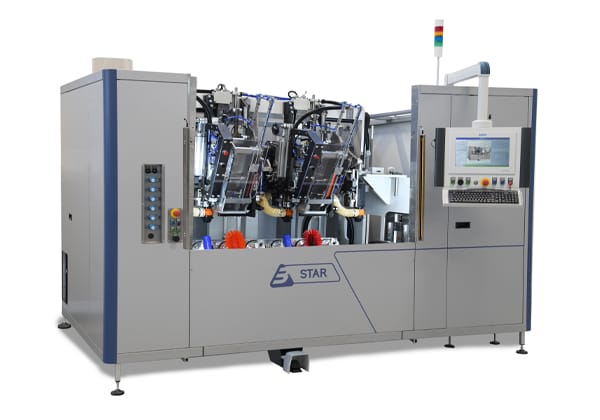
A vertical tufting machine is a motion platform. It positions a brush block, drills a hole and inserts a bundle of filament into that hole, repeating the cycle across a programmed pattern. What varies between one manufacturer’s output and another’s is the tooling package fitted to that platform.
This matters commercially. The machine is a one-time capital purchase, but tooling is where product flexibility, wear cost and changeover time live. When you compare quotations, compare tooling packages line by line — not just the headline figure discussed on the brush making machine price in India page.
2. Drills: Diameter, Depth and Sharpening Discipline
The drill sets hole diameter and depth. Both are governed by the handle or block you are filling: a thin-walled plastic handle cannot take the same hole depth as a solid wooden broom head, and drilling too deep is a scrap-generating error rather than a cosmetic one.
Drills are wear items. As the cutting edge dulls, hole walls become ragged, the tuft seats poorly and retention drops — often before anyone notices visually. Two habits separate well-run plants from the rest:
• Sharpen on a schedule, not on failure. A drill sharpener restores geometry consistently and extends drill life, converting an unplanned stoppage into a planned five-minute task.
• Keep a rotation set. Swapping in a sharpened drill and servicing the removed one offline keeps the machine running while tooling is maintained.
Drill condition sits directly upstream of finished-brush quality — the connection is spelled out in brush quality control checks.
3. Filling Tools and Hole Diameter Range
The filling tool picks up a measured bundle of filament and drives it into the drilled hole. Its size range is the single most useful specification when matching a machine to a product catalogue. Published filling tool range for the Star Gamma spans 2.2 mm to 7.5 mm hole diameter, with a fibre length range of 40 mm to 300 mm — which is what allows one machine to cover fine dish brushes at one end and long brooms at the other.
Two practical implications:
• Tuft density is a tooling decision. Hole diameter and hole spacing together determine how full the finished brush looks and how it performs in use.
• Each additional tool size is another changeover. Standardising your catalogue around fewer hole diameters is one of the cheapest throughput improvements available to a small plant.
The mechanics of the drill-and-fill cycle are covered on the brush drilling and filling machine page.
4. Staple-Set and Anchor-Set Tooling
There are two ways to hold a tuft in a hole, and they call for different tooling.
• Staple-set. A thin metal staple pins the folded bundle into the drilled hole — the standard method for most household and industrial brushes.
• Anchor-set. A wire loop anchors the bundle at the base of the hole. Because it needs less material around the hole, anchor tufting supports handles with wall thickness as low as 6 mm, useful for lightweight moulded designs where staple-set would split the wall.
The Star Delta supports both methods and offers mobile jaws for a greater flare angle, which changes how the tuft spreads and therefore how the finished brush sweeps or scrubs. If your catalogue includes thin-walled handles, confirm anchor tooling at quotation stage rather than after commissioning — the automatic brush making machine page lists the supported filling methods.
5. Carriages, Bridges and Clamping Systems
The clamping arrangement holds the block and presents it to the drill. It also limits your product geometry, so specify it against your two-year product plan, not just your launch SKUs.
• Radial carriage. For flat brushes with radially angled filling — brooms and floor brushes.
• Upright (parallel) filling. For flat brushes where tufts sit perpendicular to the block face.
• Double hockey carriage. For the double hockey toilet brush, one of the highest-volume household formats in India — machine detail on the double hockey brush machine page.
• Round head clamping system. For round head toilet brushes and semi-spherical products.
• Double clamping (optional). Available on the Star Gamma to raise productivity by cutting idle time between blocks.
For technical and industrial geometries — cylinder brushes, discs, large-format work — interchangeable holders and bridge options extend the same platform. See industrial brush machines, the technical brush machine page, or tank brush making machines for oversized profiles.
6. Filament Types the Tooling Must Handle
Tooling and filament are a matched pair. A filling tool that runs polypropylene smoothly may behave differently with stiff abrasive filament or a coarse natural fibre, and tool wear rates vary accordingly.
• Synthetic: PP, PET, nylon and abrasive filament for household, technical and scrubbing applications.
• Natural: Palmyra, cocoa fibre and Tampico for brooms and traditional cleaning products.
• Metallic: Wire fibres for industrial brushes, typically on manual or dedicated setups such as the Theta manual vertical tufting machine.
Where you blend fibres for cost or performance, a filament mixer keeps the blend consistent across the batch — otherwise tuft-to-tuft variation shows up in the finished brush. Twisted-wire products handle filament differently again; the twisted wire brush manufacturing guide explains the Sigma twist brush machine route.
7. Changeover: The Hidden Cost of a Wide Catalogue
Changeover is tooling economics in practice. Each model change can involve swapping the filling tool, changing the drill, re-setting the clamping system and loading a different program. A plant that changes model twice a day is spending real capacity on setup.
Three ways to cut it:
• Group production runs by tool size so consecutive SKUs share the same drill and filling tool wherever possible.
• Pre-stage tooling at the machine before the current run ends, so the change is a swap rather than a search.
• Choose the machine for your SKU pattern. Quick-changeover platforms like the Star Gamma are built for frequent model changes; continuous-operation flagships are built for long runs. The trade-off is explained in how to choose a brush making machine and quantified in brush making machine production capacity.
8. Spare Parts, Wear Items and Technical Support
Tooling consumables are an operating cost, not a capital one. The recurring items in a brush plant are filling tool parts, springs, belts and pneumatic pipes — all of which Borghi India supplies as a critical spare parts set with each machine, reducing the cash a new manufacturer needs to hold on day one.
On diagnostics, the machine software includes Industry 4.0 alarm diagnostics that identify and locate faults directly, plus remote assistance via router, so most support issues are resolved without waiting for a site visit. Commissioning includes operator training at the Bhiwandi facility followed by on-site training during installation, so the team learns tooling changeover on their own machine. Common questions are answered on the brush making machine FAQs page.
Frequently Asked Questions
What tooling comes with a brush making machine?
A machine is configured with the drill, filling tool and clamping arrangement for your specified product mix. Borghi India also supplies a critical spare parts set — filling tool parts, springs, belts and pneumatic pipes — with each machine.
What hole diameters can a brush tufting machine handle?
Published filling tool range on the Star Gamma is 2.2 mm to 7.5 mm hole diameter, with fibre lengths from 40 mm to 300 mm. Confirm the range for your specific configuration at quotation stage.
When should brush machine drills be sharpened?
On a schedule based on run hours, not after quality problems appear. Blunt drills produce ragged holes and weak tuft retention before the operator sees a visible defect.
Do I need separate machines for staple-set and anchor-set brushes?
Not necessarily. The Star Delta supports both filling methods, including mobile jaws for a greater flare angle. Specify the requirement before purchase so the machine is tooled accordingly.
Specify the Right Tooling Package
Tooling decisions made at quotation stage set your product range for years. Share your brush drawings, handle wall thicknesses and target hole diameters with Borghi India and the team will map them to a drill, filling tool and clamping configuration. Get in touch, or continue with brush making machine production capacity and the complete brush production line.