

Brush Making Machine Production Capacity: How to Calculate Real Output Per Shift
A brush making machine’s capacity is set by four numbers: tufts per minute, tufts per brush, the number of clamping stations, and the hours the machine actually runs. An entry-level vertical tufting machine running at 450 tufts per minute and a flagship running at up to 1,000 tufts per minute produce very different daily volumes from the same floor space — and the finishing line, not the tufting machine, is usually what caps output.
1. The Four Numbers That Decide Your Output
Every capacity conversation in brush manufacturing comes back to the same four inputs. Get these right and your production plan holds. Guess at them and you will over-commit to buyers.
• Tufts per minute. The drilling-and-filling rate of the machine. This is the headline speed figure and it is machine-specific.
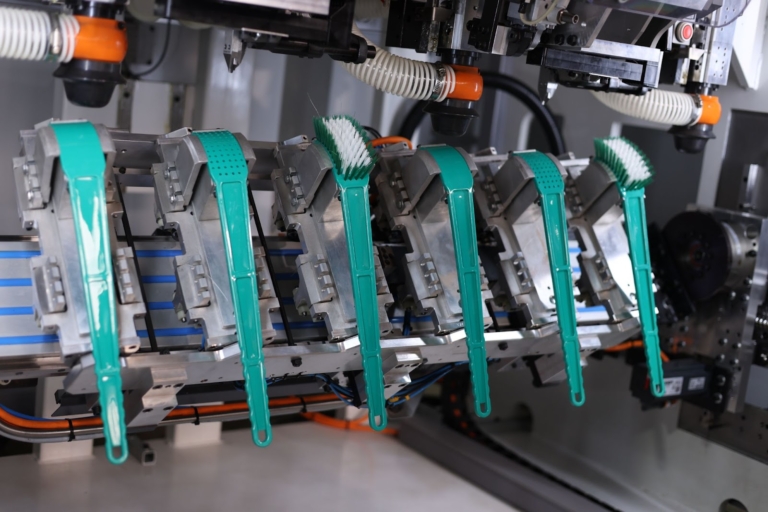
• Tufts per brush. A dish brush may need a few dozen holes; a broom head or double hockey toilet brush needs many more. This is product-specific and it changes every time you switch SKU.
• Clamping stations. How many brush blocks the machine holds and works through in a continuous cycle. More stations mean less idle time between blocks.
• Effective running hours. Shift length minus changeover, tool sharpening, filament reloading and breaks. This is the number first-time manufacturers overestimate most often.
Machine speed is only the first of the four. If you are still deciding between automation levels before you plan capacity, read manual vs automatic brush making machines first, then come back to the arithmetic below.
2. The Capacity Formula
The working formula for a tufting machine is straightforward:
Brushes per hour = (tufts per minute × 60 × utilisation %) ÷ tufts per brush
Utilisation is the honest part of the equation. A well-run single-shift operation with a stable SKU mix will not sit at 100 per cent — block loading and unloading, model changeover, drill sharpening and filament changes all consume machine time. Plan with a conservative utilisation figure, measure your actual figure over a full month, then revise the plan against your own data.
Apply the same discipline downstream. Trimming, flagging and beating each have their own rate, and a brush is not saleable until it has passed through all of them. Line capacity is set by the slowest station, not the fastest.
3. Worked Example: Entry-Level vs High-Output Tufting
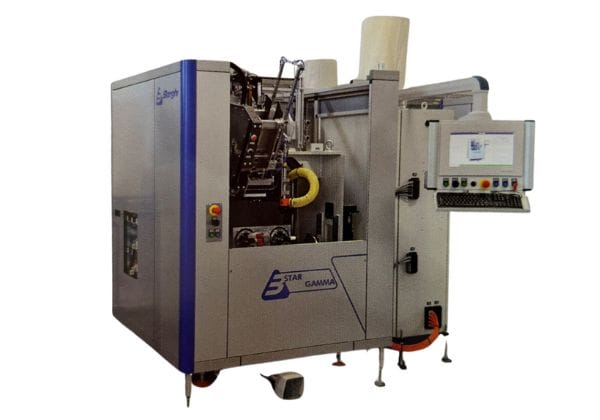
Borghi India’s range spans both ends of this scale, which makes for a clean comparison. The specifications below are published machine data; treat the comparison as a ratio to apply to your own product’s hole count rather than as a promised output figure.
| Parameter | Star Gamma (entry level) | Star Delta (flagship) |
| Control | 5-axis CNC vertical tufting | 5-axis CNC vertical tufting |
| Drills / filling tools | 1 drill, 1 filling tool | 3 drills, 2 filling tools |
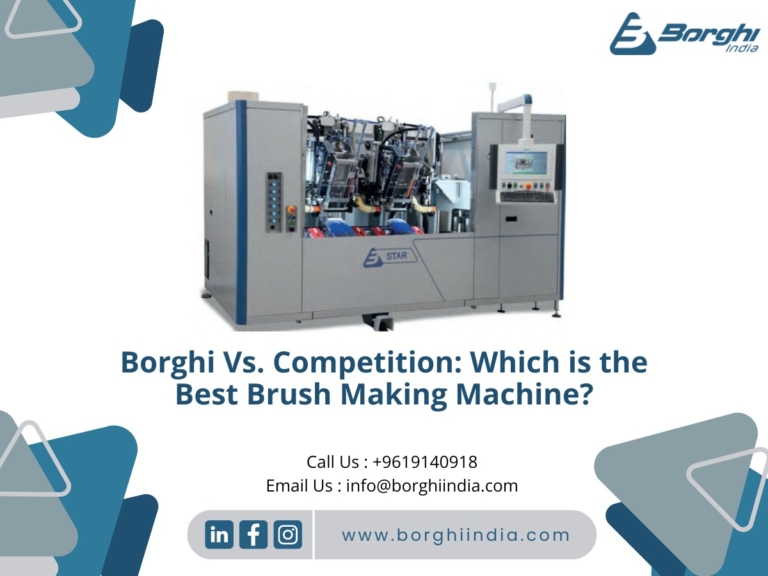
| Clamping stations | Single (double clamping optional) | 6 stations, continuous operation |
| Speed | 450 tufts per minute | Up to 1,000 tufts per minute |
| Published output benchmark | Quick changeover for small batches and frequent model changes | Up to 7,000 double hockey brushes in 24 hours |
| Power / air | 2.6 kW; 300 nl/min at 6 bar | Contact for configuration data |
| Best fit | Diverse SKUs, smaller batch sizes | Long runs of consistent SKUs |
The flagship is roughly twice the tufting speed of the entry machine, but it also carries three drills, two filling tools and six clamping stations — so the practical gap in daily output is wider than the speed figure alone suggests, because far less of its cycle is spent waiting for blocks to be loaded and unloaded. Full specifications are on the Star Gamma and Star Delta product pages, and the automatic brush making machine page explains how the drilling and filling cycle is sequenced.
4. Where Capacity Actually Leaks
Machines rarely underperform because of their rated speed. They underperform because of these five losses, in roughly this order of severity for Indian brush plants:
• Changeover. Every model change means new tooling, a new drilling program and a re-set clamping arrangement. A plant running eight SKUs across one machine can lose a large share of its week to setup — which is exactly why quick-changeover machines exist.
• Drill wear. A blunt drill produces ragged holes, poor tuft retention and eventually a stoppage. Scheduled sharpening on a drill sharpener is planned downtime; a broken drill mid-run costs several times more.
• Filament handling. Inconsistent filament feed causes short tufts and rejects. Where you run blends, a filament mixer keeps the mix uniform and reduces in-cycle interruptions.
• Block quality. Warped or dimensionally inconsistent injection-moulded handles jam clamping and force operator intervention. Handle mould quality is a capacity issue, not just a cosmetic one.
• Operator learning curve. Output climbs for several weeks after commissioning. Budget for a ramp-up period rather than assuming rated output from week one.
5. Your Finishing Line Is Usually the Real Bottleneck
A tufted brush is a half-finished product. It still needs trimming to uniform length, flagging if the product calls for split tips, and beating for a clean retail surface. If finishing capacity sits below tufting capacity, the tufting machine simply builds work-in-progress.
• Roto Trim — rotary-blade trimming to a precise uniform filament length.
• Roto Flag — a 48-knife flagging unit for split-end bristle tips.
• Roto Beat — final surface beating for a uniform, retail-ready appearance.
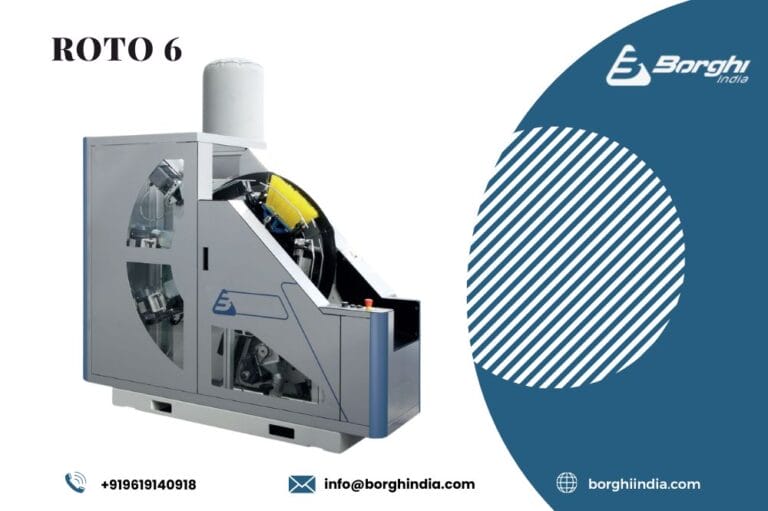
• Roto 6 — handles up to six brushes at a time in a continuous cycle, with cam-based or electronically controlled profiles for flat and curved work.
• Roto B — dedicated to round head and semi-spherical brushes, including toilet brushes and glass-washing brushes.
Note the operating model: the manual Roto units are operator-paced, so their throughput scales with skill and headcount rather than a rated speed. Machines such as the Roto 6 series and Roto B change that equation because they process multiple pieces per cycle. Cost the finishing line at the same time as the tufting machine — the full brush production line sequence shows what a complete line contains.
6. Utilities and Floor Space at Full Capacity
Capacity has a physical footprint. Published figures for the Star Gamma put power consumption at 2.6 kW with air consumption of 300 nl/min at 6 bar — modest enough that electricity cost per brush stays low even at full utilisation, but the compressor must be sized correctly or air pressure drops and cycle times stretch.
On space: a functioning household brush setup built around one tufting machine and its finishing line can be organised inside roughly 3,000 sq. ft., including raw material storage, packing and a quality check area. If your capacity plan involves a second machine within two years, take the extra floor space at the outset rather than relocating mid-growth. The low-investment brush manufacturing opportunity article breaks that layout down area by area.
7. Matching Capacity to Your Order Book
Three practical rules for sizing:
• Size for committed volume, not ambition. An under-utilised flagship machine has a worse cost per brush than a fully utilised entry machine.
• Count SKUs before volumes. A high-SKU, low-batch business is a changeover problem, so flexibility beats raw speed. A low-SKU, high-volume business is a throughput problem, so continuous operation and multiple clamping stations pay for themselves.
• Add the second machine before you hit the ceiling. Capacity added at 85 per cent utilisation protects delivery commitments. Capacity added at 100 per cent means you have already turned business away.
For the wider commercial picture — machinery, tooling, working capital and raw-material supply — see how to start a brush manufacturing business in India and the brush making machine price in India guide.
Frequently Asked Questions
How many brushes can a brush making machine produce per day?
It depends on tufts per brush. A published benchmark for the flagship Star Delta is up to 7,000 double hockey brushes in 24 hours. For any other product, divide your machine’s tufts-per-minute rate by the hole count of your specific brush and apply a realistic utilisation percentage.
Does a faster machine always mean more output?
No. Tufts per minute is one of four variables. Changeover frequency, clamping stations and finishing capacity can each cap output well below the machine’s rated speed.
How do I increase output without buying a second machine?
Attack utilisation first: consolidate SKUs to reduce changeovers, schedule drill sharpening, standardise handle dimensions, and confirm the finishing line is not the constraint.
What is the difference between rated capacity and effective capacity?
Rated capacity is the machine’s laboratory speed. Effective capacity is what your plant produces after setup, tool changes, material handling and quality rejects. Commit commercially against the second number.
Plan Your Line Around Real Numbers
Borghi India supplies vertical tufting, twisting, mop assembly and finishing machinery across India, Nepal and Bangladesh, and can size a configuration against your specific SKU mix and volume commitments. Share your product list and target monthly output, and the team will work back to a machine and finishing configuration. Contact Borghi India for a capacity assessment, or read next: brush making machine tooling explained and brush quality control checks.