


Choosing between a manual, semi-automatic and automatic brush making machine comes down to three things: your output target, your labour model and your budget. This guide compares the three approaches so you can match the machine to your business stage.
| Feature | Manual | Semi-automatic | Automatic (CNC) |
|---|---|---|---|
| Output | Low | Medium | High (up to 1,000 tufts/min) |
| Operators | One, hands-on | One, assisted | One, supervisory |
| Best For | Custom, low-volume production | Growing production needs | High-volume, uniform batches |
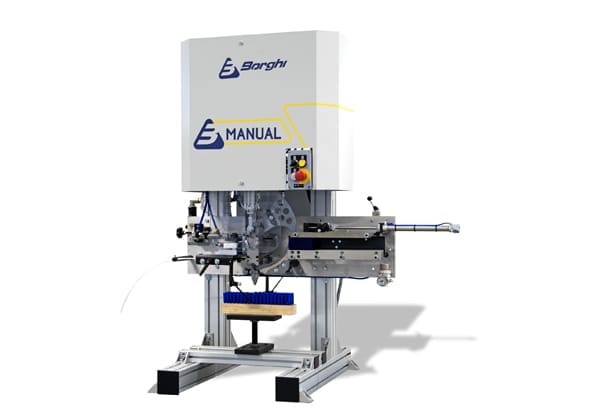
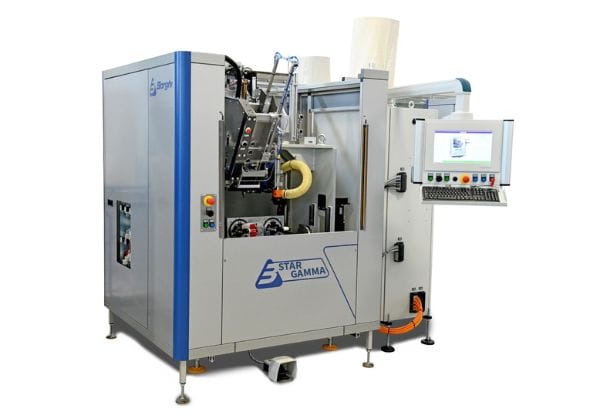
| Example | THETA | STAR GAMMA | STAR DELTA |
A manual machine like the THETA vertical tufting machine uses foot-pedal activated filling and mechanical pointer positioning, giving the operator precise control over every tuft. It is the right choice for custom, low-volume and prototype brush production where flexibility matters more than speed.
Semi-automatic household brush machines add automation to drilling and filling while keeping setup simple — a strong middle option for manufacturers scaling from manual to volume production.
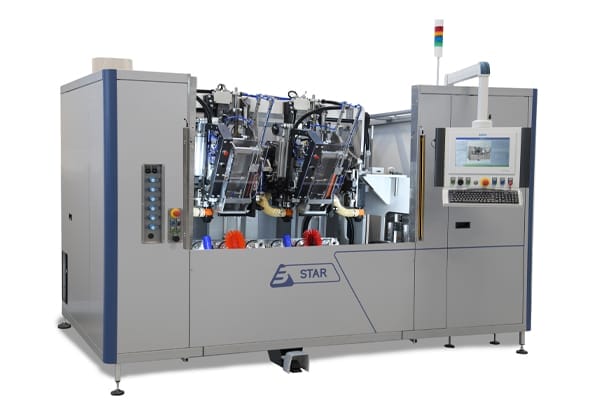
A fully automatic brush making machine automates the entire drilling, filling and trimming cycle. Borghi India’s flagship STAR DELTA runs 5-axis CNC tufting at up to 1,000 tufts/minute with 2 filling tools, 3 drills and 6 clamping stations — producing up to 7,000 double hockey brushes in 24 hours. Automation removes manual inconsistency, cuts labour cost per brush and delivers uniform quality across every batch.
Whichever stage you are at, every machine ships with Borghi India’s turnkey support. Request a quote with your target output to get a recommendation.